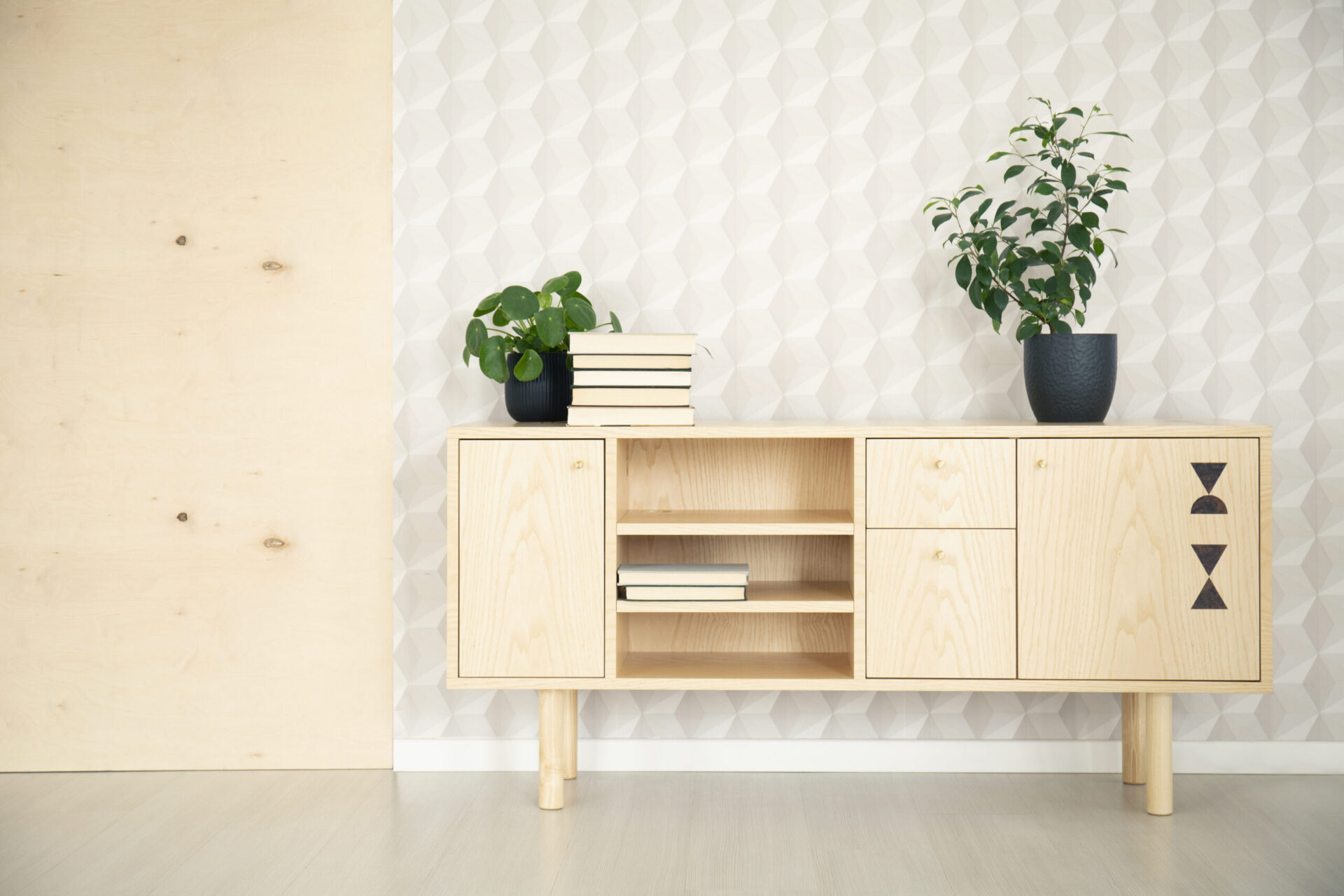
CNC machining and bespoke woodworking are complementary rather than competing approaches. CNC is valuable where a project needs accurately repeated components or geometry taken directly from a digital design; craftsmanship remains essential in detailing, assembly, fitting and finishing.
Cabinet components
Panels, shelves, dividers and other repeatable cabinet parts can be prepared from a controlled drawing. Consistent dimensions help when multiple components need to align during assembly.
Bespoke furniture
Tables, storage, display furniture and custom interior pieces can include CNC-cut elements without becoming mass-produced products. Digital machining can handle selected geometry while the overall piece remains individually designed and made.
From CAD to workshop
A clean DXF gives the workshop a defined starting point. Material, thickness, orientation and machining requirements are then reviewed before cutting. Parts can subsequently move into the normal woodworking process for assembly and finishing.
Design for production
The most successful CNC furniture drawings account for the real material thickness, tool access, joint strategy and how the component will be assembled. A visually correct CAD drawing is not automatically a production-ready drawing.
Starting a project
If you already have production geometry, use the CNC ordering route. For a broader bespoke furniture or cabinetry project, use the project enquiry so the complete requirement can be discussed rather than treating it as a cutting-only job.