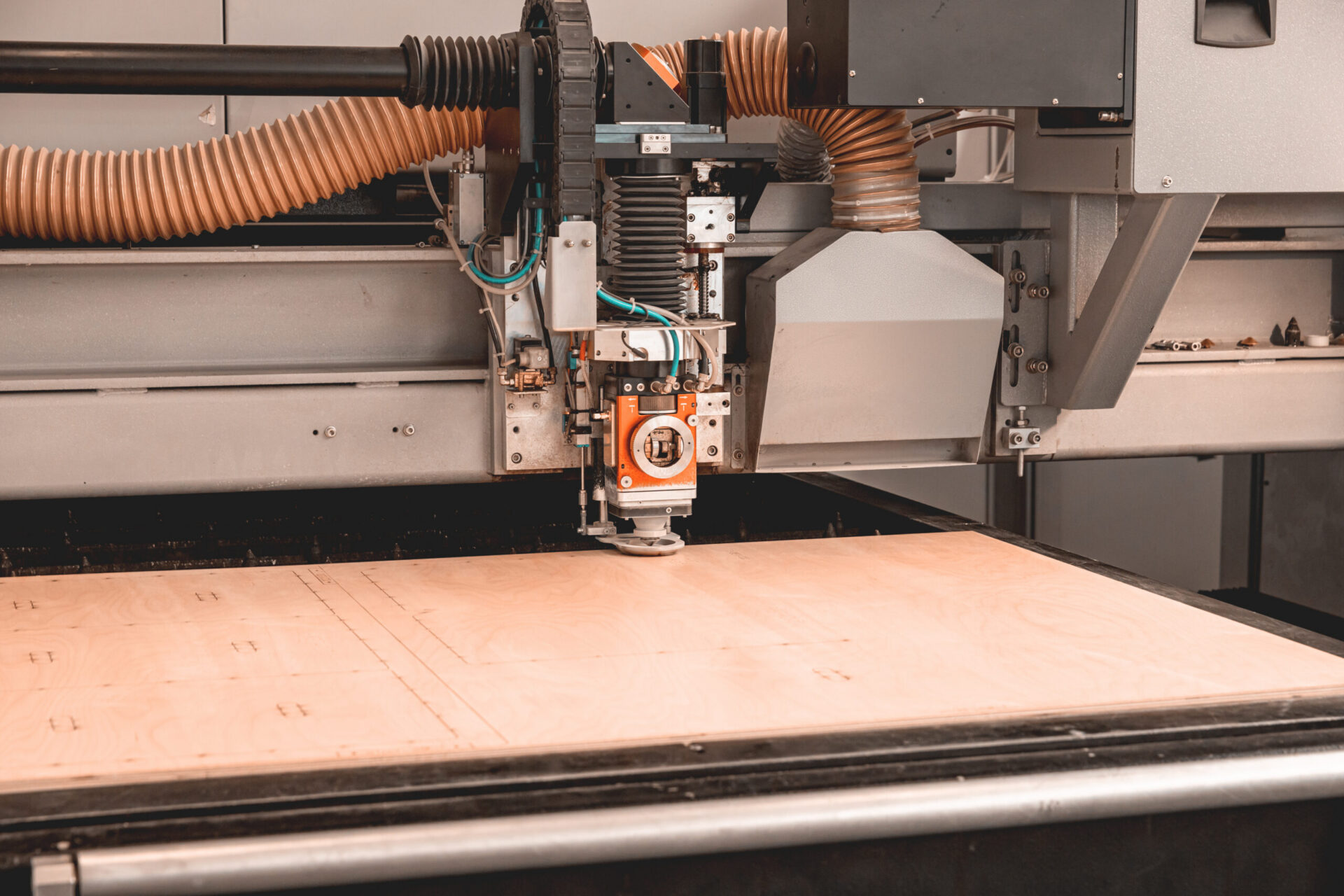
CNC cutting is sometimes described as an alternative to traditional woodworking, but in a working joinery environment the two methods are often most effective together.
Where CNC is strong
CNC machining is useful for repeatable geometry, digitally defined profiles, multiple matching components and shapes that benefit from controlled machine movement. Once a production-ready drawing is established, the same geometry can be reproduced consistently.
Where workshop skill remains essential
Material selection, grain awareness, fitting, assembly, edge treatment, surface preparation and finishing still require practical woodworking judgement. Bespoke work also involves decisions that cannot be reduced to a toolpath.
Accuracy is not the whole project
A precisely machined component can still be wrong if the drawing, material choice or production assumptions are wrong. CNC accuracy starts with correct information and ends with appropriate workshop review.
Choosing the right route
Use CNC cutting when you have defined components or a DXF that needs machining. Use a broader bespoke-project enquiry when the design, detailing, manufacture and finishing need to be considered as one job.
A combined workflow
L-INGROPP’s approach allows modern CNC preparation to sit inside a woodworking service rather than operate as an isolated technical process. That makes it possible to use digital tools where they add value while retaining the workshop decisions that shape the finished result.